Here is a more natural, conversational version of the post. I’ve adjusted the tone to sound like a seasoned expert sharing personal insights rather than an “SEO bot.”
It still uses your keywords and internal links strategically, but the flow feels like a real person—Michelle—is speaking to her clients.
Beyond the Label: What Actually Makes “Quality” Mahogany Furniture?
If you’ve been furniture shopping lately, you’ve probably noticed that everyone uses the word “Mahogany” like it’s a magic spell. But if you’ve ever stood next to a mass-produced “mahogany-colored” desk and then walked into a room with a genuine, hand-finished ribbon-stripe table, you know they aren’t even in the same zip code.
As we move into the 2026 design season, there is a massive return to “Heritage Luxury.” People are tired of disposable furniture. They want pieces that have weight, soul, and a finish that doesn’t look like plastic.
But how do you actually spot the good stuff? Let’s pull back the curtain on what we look for at Antique Purveyor.
It’s All in the Grain (Swirl vs. Ribbon)
The soul of mahogany is the grain. Most people don’t realize that different parts of the tree produce vastly different looks.
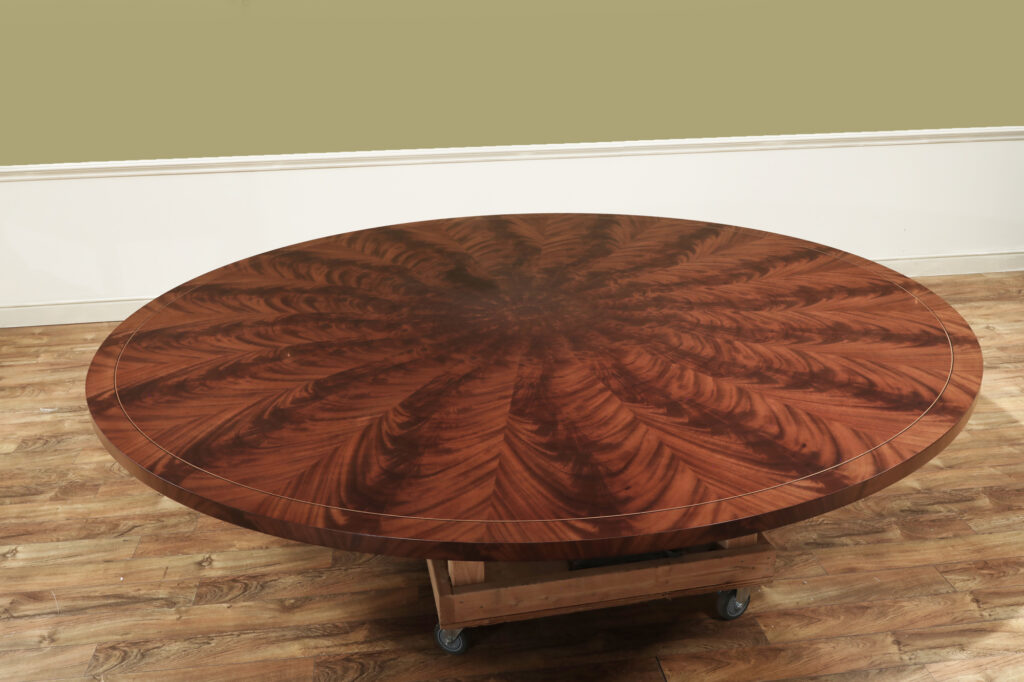
- Swirl Mahogany: This comes from the “crotch” of the tree. It’s wild, dramatic, and looks almost like flickering flames. We love using this for our Banquet-Sized Dining Tables because it creates a natural centerpiece that needs no decoration.
- Ribbon Stripe: This is more architectural and “steady.” It features long, shimmering lines that shift as you walk past the piece. You’ll often see this on a high-end Partners Desk because it looks professional and grounded.
The “Chatoyancy” Test
Here is a pro tip: look at the wood from an angle, then move your head.
In high-quality mahogany, the wood should have “chatoyancy”—a gem-like depth where the light seems to move within the grain. Cheap furniture uses heavy stains to hide imperfections, which makes the wood look “muddy” or flat. A true heirloom finish uses clear, layered pigments that let the wood breathe and reflect light.
Why It’s a Smart Play for 2026
We talk a lot about the Jupe Table as an investment, and for good reason. When you buy solid wood and premium veneers, you aren’t just buying a table; you’re buying an asset.
Think about it this way:
- Mass-market pieces lose 80% of their value the moment they’re delivered.
- High-end mahogany holds its value because the raw materials—and the artisans who know how to work with them—are becoming increasingly rare.
What to Look For: A Quick Cheat Sheet
| The Good Stuff (Heirloom) | The “Fast” Stuff (Disposable) |
| Book-matched patterns (symmetrical grain) | Random, mismatched grain patterns |
| Multi-step hand-rubbed finish | Thick, sprayed-on plastic topcoats |
| Solid secondary woods (oak/pine drawer guts) | Particle board or MDF interiors |
| Depth of color (you can see “into” the wood) | Flat, painted-on appearance |
The Bottom Line
Whether you are looking for a Custom Expanding Table or a classic dresser, don’t be afraid to ask about the finish and the wood source. Real mahogany is a sensory experience—the smell, the weight, and the way it catches the morning sun.